The game · play all three
A submarine in a dark sea cave
The brief: “I want a little game where you pilot a submarine down into a dark sea cave with a headlamp, collecting glowing creatures before your air runs out.” Each game below is the first version Claude handed over, unchanged.
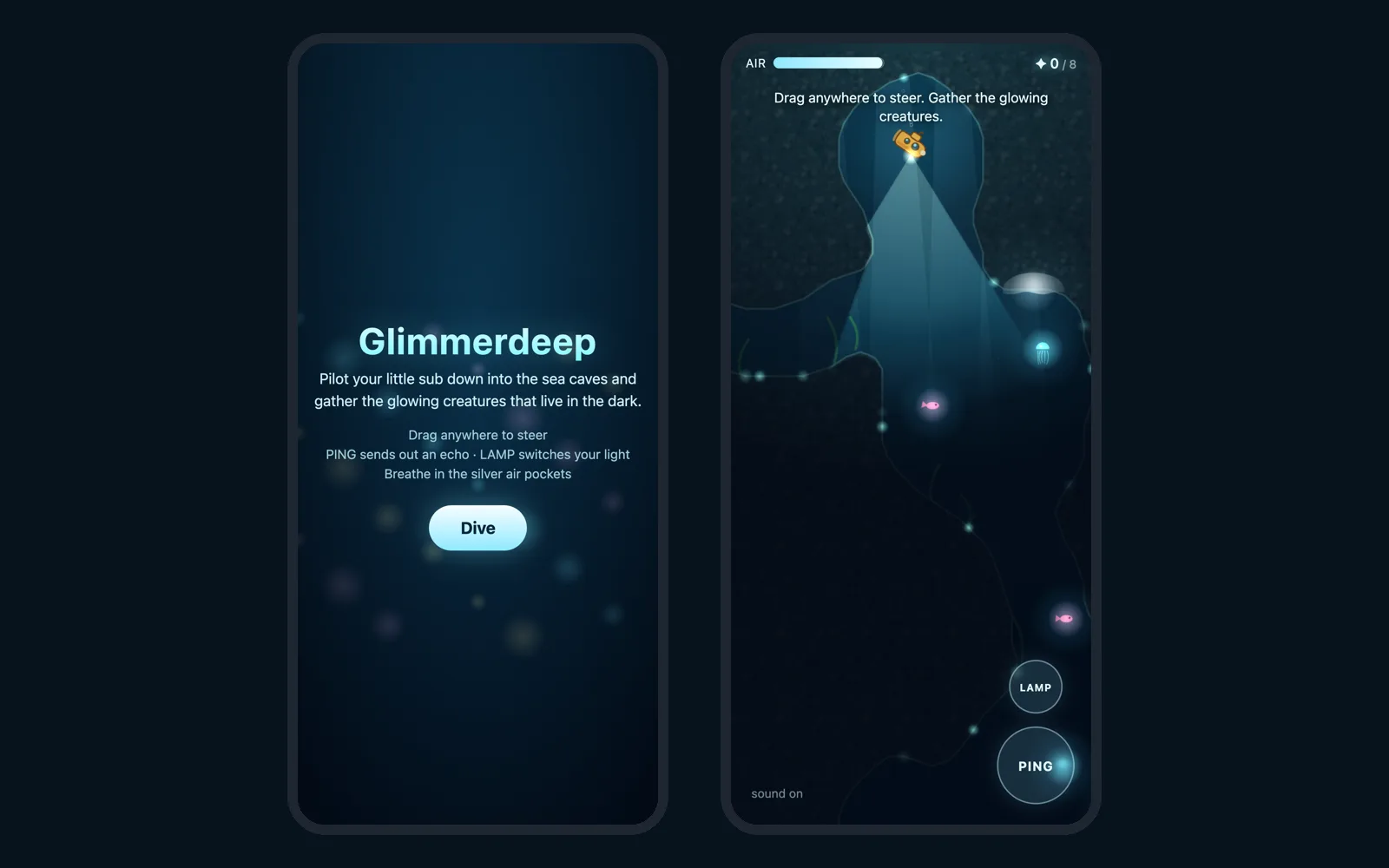
Glimmerdeep
Before building, it asked six questions in one message. They covered games Richard loved, what bores Richard, the feel, the device, how a dive goes and what to leave out. Richard’s answers named Echo the Dolphin, air pockets underwater and levels that end.
RichardThis is beautiful, amazing concept with the fish running away when there’s light, switching off the light to attract them… it really got the concept in the brief of making me nostalgic for Echo the Dolphin.
This one is a keeper, I’ll get my kids to play it
12 minutes of building · $2.79
Play it, best on a phone →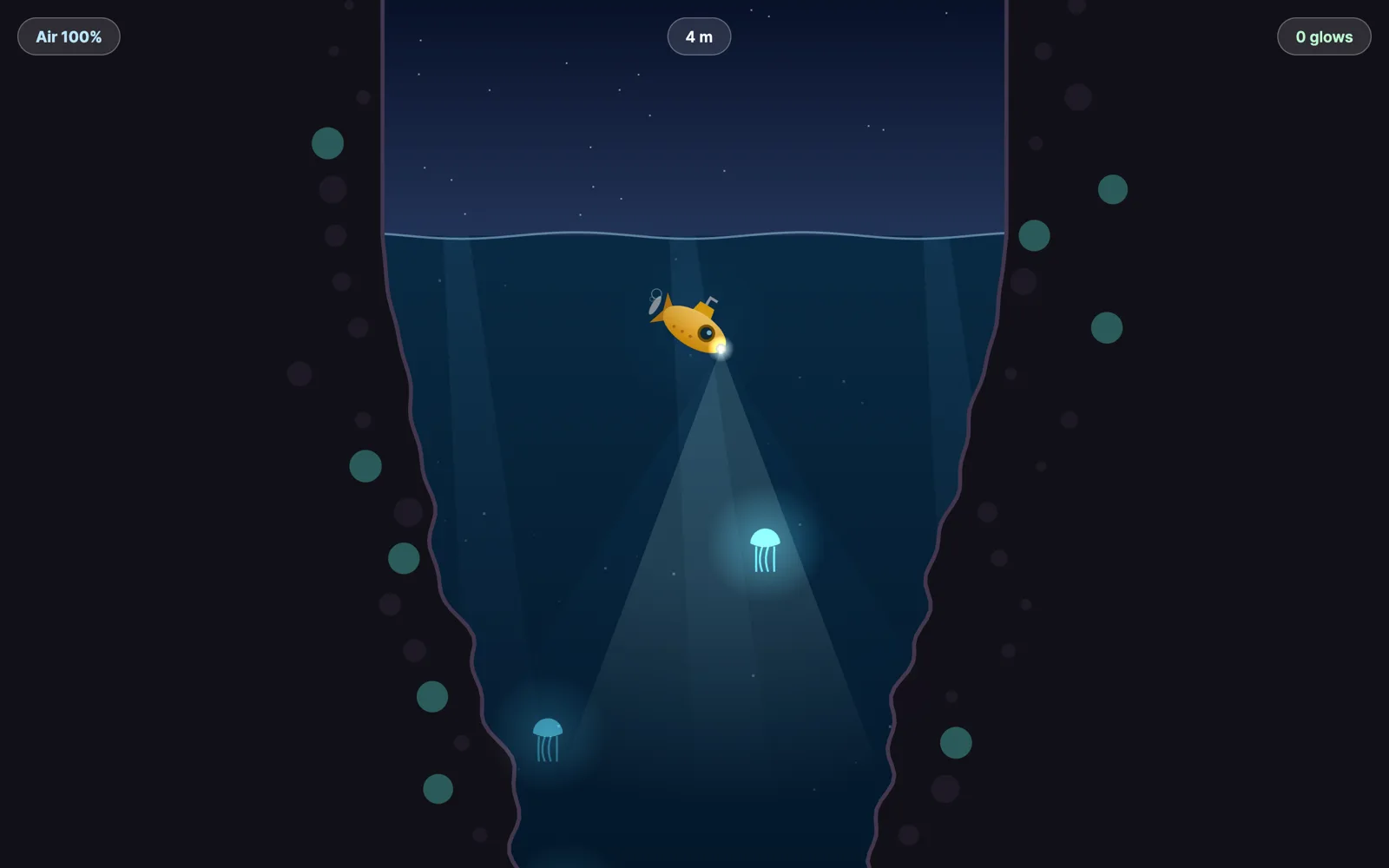
Deep Glow
It asked nothing and built the whole game straight away. It tested it at desktop and phone sizes and listed the choices it had made for Richard.
RichardIt works fine, no sound which is sad and completing the game is fairly easy. The difficulty doesn’t appear to increase and getting air is a breeze.
11 minutes · $2.63
Play it →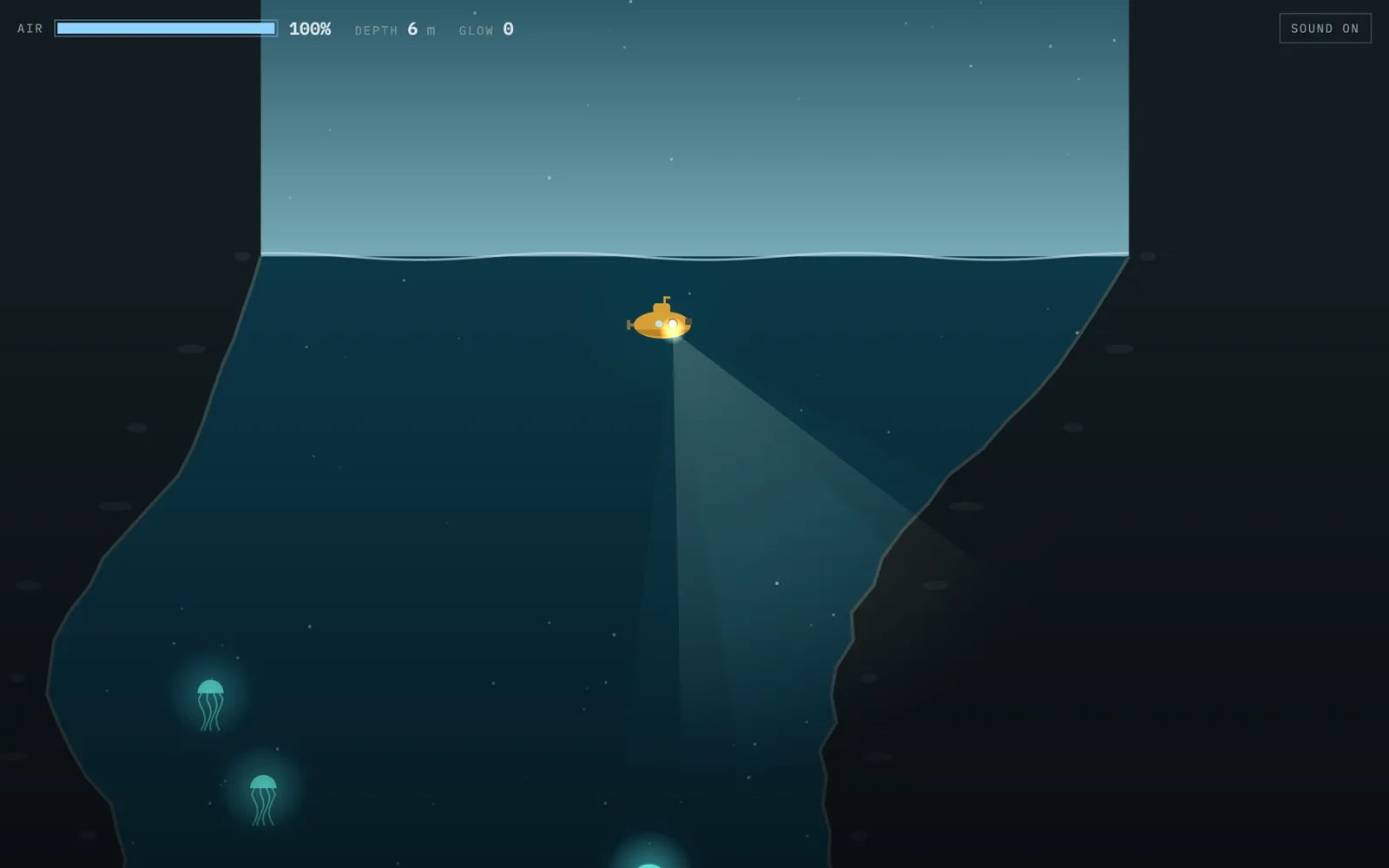
Lumen Dive
It asked nothing and built one HTML file. It said it hadn’t played it. Served on its own, its title and game-over screens stayed over the cave after you pressed Dive. That’s one of the traps the game guide names, so we added the guide’s one-line fix to this copy.
RichardIt’s a bit better than Game 1, one extra fish type which was cool… Then you hit rock bottom at a certain point and don’t know what to do next… the game just had a bottom with no endgame. So disappointing
6 minutes · $1.28
Play it →“Game 1” is Richard’s name for Deep Glow. Richard saw each build under a number and wasn’t told which NodeGX build had the guides.
The app · pictures
A book club for eight friends
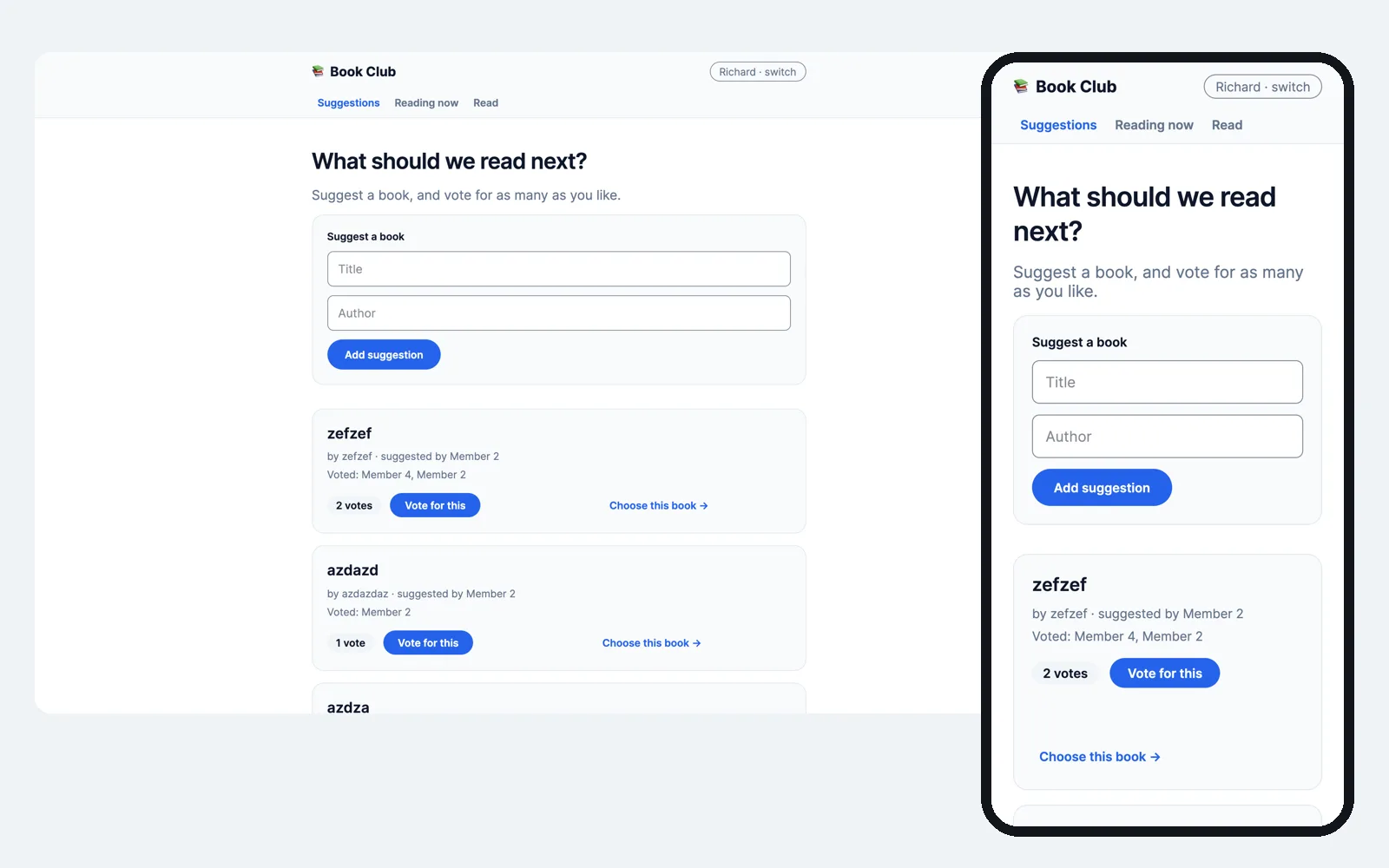
The brief: “I run a small book club, there are 8 of us. I want an app where we can suggest books, vote on what to read next, and keep a list of what we’ve read with everyone’s star rating.” Each book club needs a live database that anyone could write to. So here they’re pictures, showing what Richard typed while trying them.
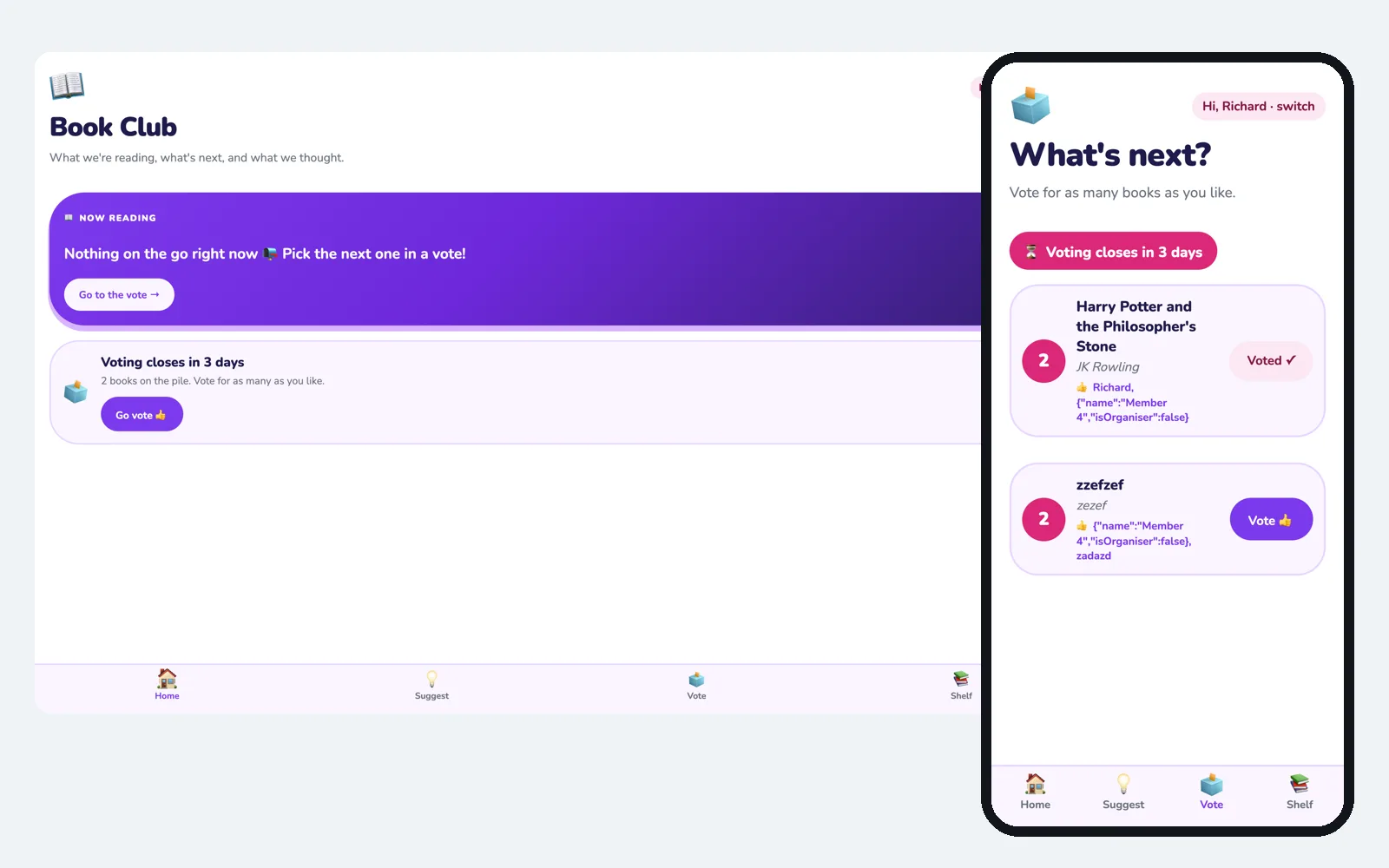
Book Club, playful
It asked five questions first. Richard chose playful, phones, pick your name, several votes each and a round that closes on a date. Rounds can last 3 days, a week or two weeks.
RichardGenerally App 1 has a better UX, but the UI is a bit childish and looks silly on desktop
16 minutes · $10.06
The code next to a voter’s name was the other NodeGX book club’s saved name. Both ran at the same address on Richard’s computer and shared the browser’s storage. We filed that against our preview tool.
Book Club, plain
It wrote a plan with three questions and waited for a go. It started with seven placeholder members beside Richard. Only the organiser can choose the next book.
RichardThis one has a clean, simple design, and is mobile and desktop friendly from the start… the app is clean but the UX is very basic.
10 minutes · $4.53
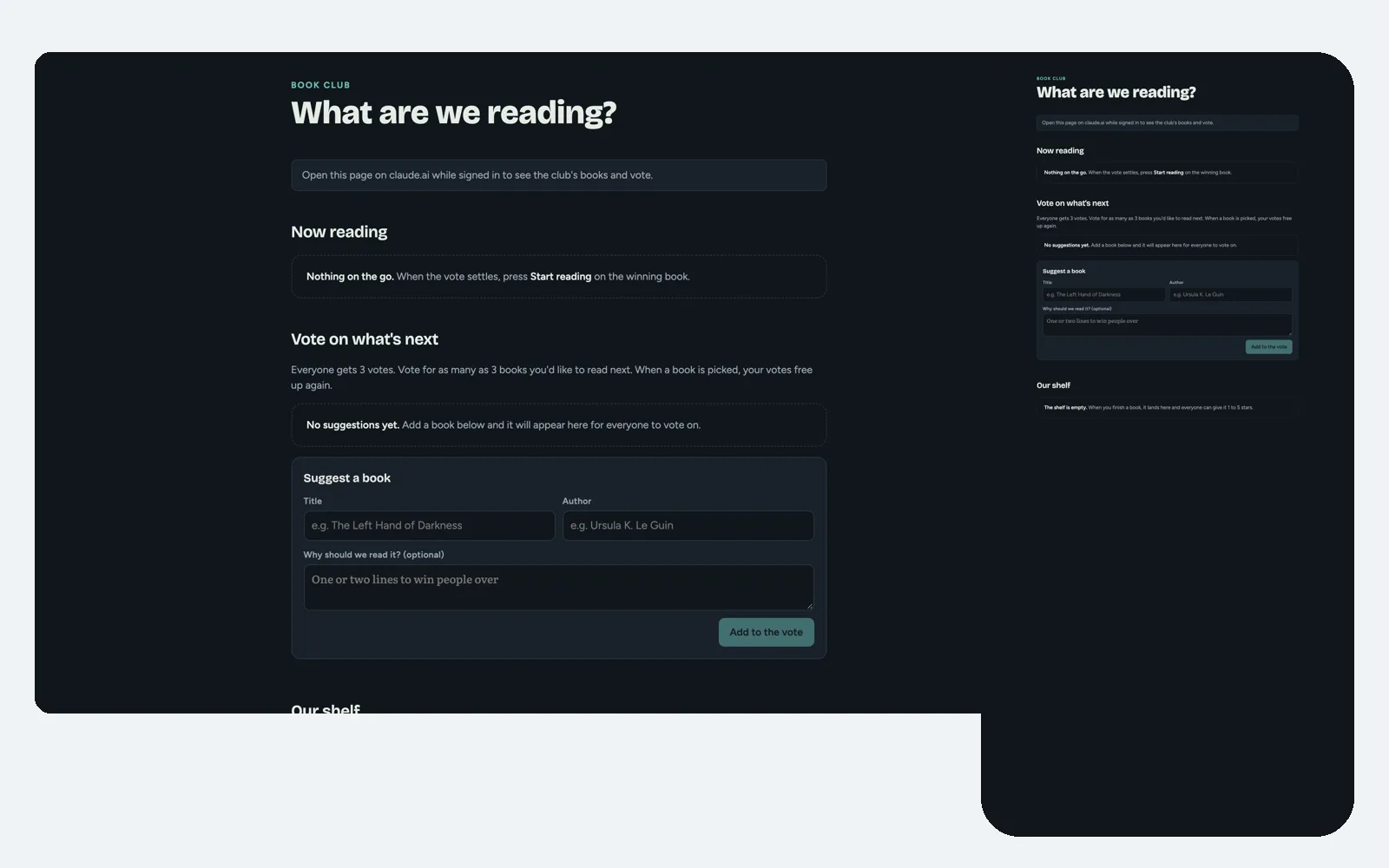
Book Club, one page
It asked nothing and published one page on claude.ai. The other seven members join as editors of that page, each with a claude.ai account. Opened anywhere else, it shows the notice in the picture.
RichardIt’s a pretty sad prototype… It looks more like a Claude artifact [than] a credible prototype.
3 minutes · $1.07
What the guides are
Two guides that Claude reads before it builds
Claude Code reads a skill when the job calls for it. npm create nodegx now writes two of them into
every new project.
The first-project guide is how the builds people loved were run. It asks for everything it needs in one message. It puts something in the person’s hands early. Then it improves the build in rounds from their notes, which it keeps word for word.
The game guide holds 90 traps from our own game builds, each with the fix. One is the screen that Lumen Dive left over its cave. It also says how to test a game on a phone-sized screen without a person there.
Neither guide gives Claude rules to obey. In an earlier test, making Claude follow a method up front produced the worse game. So these guides only pass on what we’ve learned.
What this shows, and what it doesn’t
One build each, judged by the person who makes NodeGX
Both builds with the guides asked their questions before building. Neither of Claude’s builds on its own asked anything. What Richard praised in Glimmerdeep came from Richard’s own answers.
- Each brief was built once per folder. A second run could come out differently.
- Richard makes NodeGX. Nobody told Richard which NodeGX build had the guides. Richard asked for the two builds by Claude on its own afterwards, so those two weren’t hidden.
- The builds that asked questions got a second turn, with Richard’s answers.
- The book club with the guides cost $10.06, against $1.07 on its own. Part of that was Claude keeping its preview running for two hours.
| On its own | NodeGX, no guides | NodeGX with guides | |
|---|---|---|---|
| Game | 6 min, $1.28 | 11 min, $2.63 | 12 min, $2.79 |
| Book club | 3 min, $1.07 | 10 min, $4.53 | 16 min, $10.06 |
Every build used Claude Opus 5.5 in Claude Code 2.1.317, on 3 and 4 November 2026. Each folder was sealed from our other projects and settings. Times are Claude’s building time.
Since create-nodegx 0.2.9, npm create nodegx writes both guides into every new
project. Start here walks you through it.